Quick Answer: The best pool decking and seating upgrades for Jacksonville homeowners combine slip-resistant, heat-resistant materials like travertine, brushed concrete, or composite decking with shaded seating structures that hold up against Florida humidity and UV exposure. Planning around local building codes, drainage requirements, and the 10-plus month pool season makes all the difference between a space that lasts and one that crumbles after two summers.
Key Takeaways
- Jacksonville averages 233 sunny days per year, which means your pool deck takes a beating year-round and material selection is critical.
- Travertine, brushed concrete, and composite decking are the top performers in Florida's heat and humidity.
- Most pool deck projects in Jacksonville require a permit through the City of Jacksonville Building Inspection Division.
- DIY projects like adding outdoor furniture, pergola kits, and planter borders are achievable for most homeowners. Structural decking and electrical work should go to a licensed contractor.
- A well-planned pool deck and seating area can add meaningful value to your home, especially in high-demand neighborhoods like Ponte Vedra Beach, Nocatee, and St. Johns.
Jacksonville homeowners spend more time outside than almost anywhere else in the country. With a pool season that stretches from March through November (and often beyond), the area around your pool does a lot of work. But too many backyards in Mandarin, Nocatee, and Ponte Vedra Beach have beautiful pools surrounded by cracked, faded, or plain-boring decks that drag down the whole outdoor experience.
This guide is built to help you fix that. Whether you're starting from scratch, refreshing an existing deck, or just looking to add some smart seating and shade, we'll walk through everything you need to know: materials, costs, what to DIY, what to hire out, and the specific things Jacksonville's climate throws at you that other states simply don't deal with.
A thoughtful pool surround isn't just about looks. It improves safety, reduces maintenance headaches, and genuinely increases what buyers will pay for your home. Let's dig in.

What Jacksonville Homeowners Need to Know About Pool Deck Design
Pool deck design is part functional engineering, part aesthetic planning. The deck has to drain properly so water doesn't pool (pun intended) and create slip hazards. It has to handle heat without becoming a foot-scorching nightmare at noon in July. And it has to resist the combination of chlorine splash, intense UV radiation, and Florida's near-daily afternoon thunderstorms that roll through from June through September.
Jacksonville sits in USDA Hardiness Zone 9a, which means temperatures rarely freeze but humidity stays high most of the year. That humidity accelerates mold, mildew, and wood rot in ways that homeowners transplanting from northern states often underestimate. Materials that look great in a magazine shot taken in Arizona may fail within a few seasons here.
Before you pick a single paver or chair, understand these three fundamentals:
- Drainage first. Florida's soil and rainfall patterns mean poor drainage leads to standing water, which leads to algae, structural damage, and safety risks. Your deck should slope away from the pool at a minimum grade of 1/8 inch per foot.
- Surface temperature matters. Dark materials absorb heat and can become painful to walk on barefoot. Light-colored natural stones and lighter concrete finishes stay significantly cooler in direct sun.
- Code compliance is not optional. The City of Jacksonville's Building Inspection Division requires permits for most structural pool deck additions, and the Florida Building Commission sets minimum safety standards for pool barriers, decking grades, and electrical work near water. Skipping permits creates liability and can complicate home sales down the road.
Once you have those fundamentals in place, the creative part becomes much more enjoyable and a lot less risky.
Decking Materials, Seating Structures, and Layout Ideas for Florida Pools
This is where the fun begins. There's a wider range of options today than most homeowners realize, and the right choice depends on your budget, your aesthetic preferences, and how much maintenance you're willing to do each season.
Decking Materials: The Real Comparison
Travertine pavers are the gold standard for Florida pool decks. They stay cooler than concrete or ceramic tile in direct sun, they're naturally slip-resistant even when wet, and they have a classic look that works with everything from Mediterranean-style homes in Ponte Vedra Beach to modern builds in Nocatee. The downside: travertine is porous and needs sealing every two to three years, and it's one of the pricier options upfront.
Brushed or broom-finish concrete is the workhorse of Jacksonville pool decks. It's durable, relatively affordable, and highly customizable with stains, stamps, and overlays. A plain gray slab looks dated, but a well-executed stamped concrete deck can mimic the look of natural stone at a lower cost. Watch for cracking over time, especially in areas with tree roots nearby.
Porcelain pavers have surged in popularity over the last several years. They're non-porous (huge advantage in a climate where mold loves to grow), extremely durable, and come in a wide range of finishes. Slip-resistance ratings vary by product, so make sure you're choosing a tile rated for wet outdoor use.
Composite decking works beautifully for raised deck areas adjacent to the pool, especially when you want a warmer, wood-look aesthetic without the maintenance nightmare of actual wood. Brands like Trex and TimberTech are engineered for humidity and UV resistance. Just note that composite still gets hot in direct Florida sun, so use it in shaded zones or pair it with shade structures.
Natural wood like pressure-treated pine or tropical hardwoods (Ipe, Teak) can look stunning but demands serious maintenance in Jacksonville's climate. Ipe is extremely hard and rot-resistant but expensive. Pressure-treated pine needs sealing every year or two and will warp or crack if neglected. For most homeowners, composite is a smarter long-term choice than wood unless you have a specific aesthetic commitment.
Seating Structures: Shade, Comfort, and Style
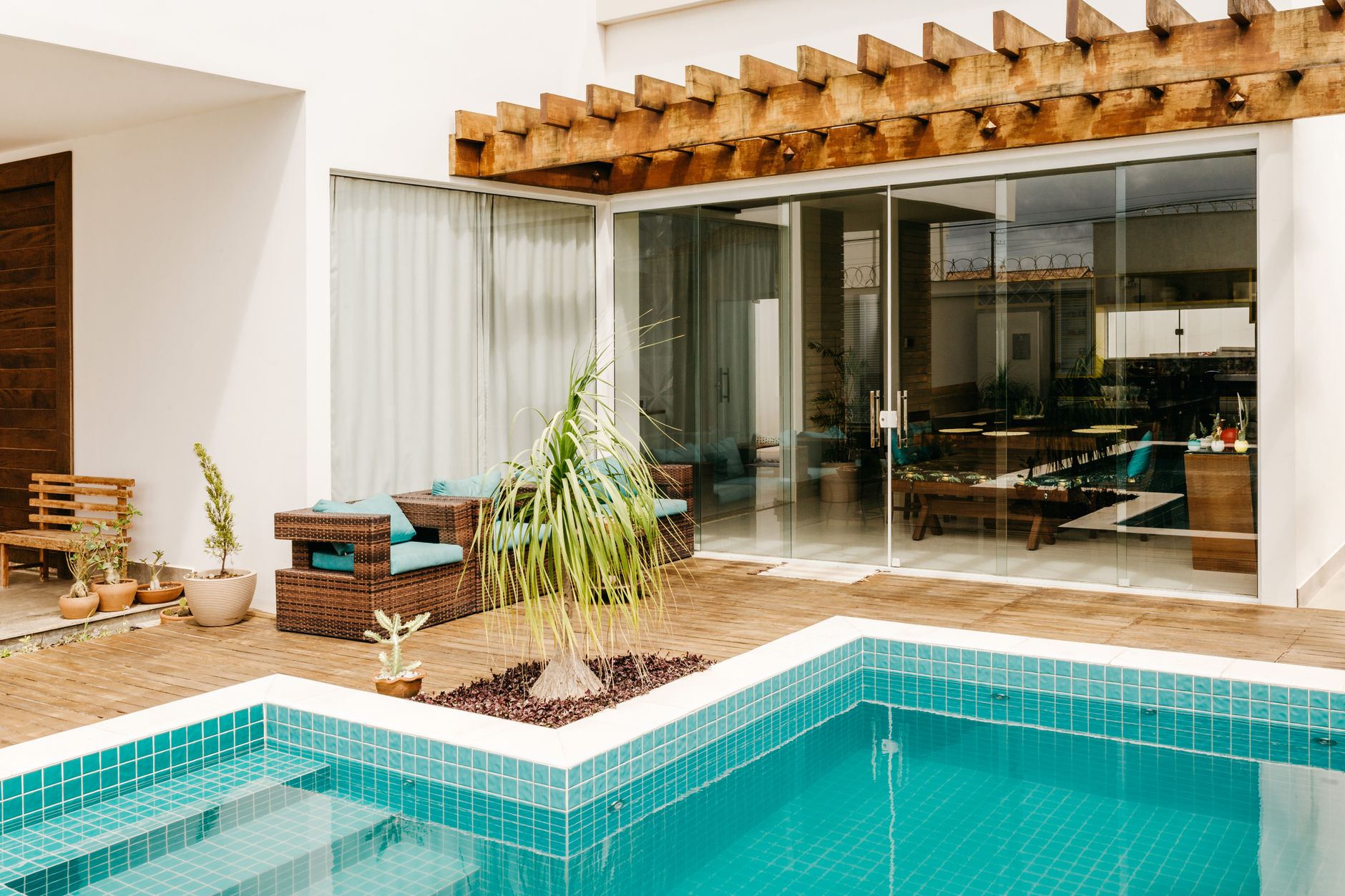
Pergolas and shade sails are probably the single highest-impact addition you can make to a pool area without major construction. A pergola over a seating zone creates a defined outdoor room, provides partial shade, and can support fans, string lights, and outdoor-rated curtains. In Jacksonville's sun, shade isn't a luxury, it's how you actually use the space at 2pm in August.
Covered lanais and screen enclosures are extremely common in Northeast Florida and for good reason. A screen enclosure keeps out the notorious Jacksonville mosquito population, reduces UV exposure, and cuts down on debris in the pool. Many homeowners in St. Johns and Fleming Island treat an enclosed pool area as a true fourth living space. If your pool doesn't have one, it's worth the investment.
Built-in benches and seating walls add seating without taking up floor space with furniture that blows over in afternoon storms. A low seating wall built in the same material as your deck ties the whole space together and holds up far better in wind events than patio furniture. Add outdoor cushions in a UV-resistant fabric and you have a setup that looks intentional and works hard.
Outdoor kitchens and bar areas are the ultimate pool deck upgrade for entertaining. Even a simple setup with a built-in grill, a small prep counter, and a mini fridge transforms a pool afternoon into an all-day gathering. Stick to stainless steel appliances and masonry construction so humidity and salt air don't degrade your investment.
Layout and Flow Considerations
Think about how people actually move around your pool. The deck should have clear pathways between entry/exit points, equipment access panels, and seating zones. Leave at least 4 feet of clear walkway around all sides of the pool. If you have children, consider designating a specific shallow-end lounging area separate from the deeper diving zone.
Zoning your deck into distinct areas (a sunning zone, a shaded lounge zone, a dining zone) makes the space feel intentional and functional rather than just a slab with some chairs scattered around. Even a modest-sized deck feels larger when it's thoughtfully organized.
Common Mistakes Jacksonville Homeowners Make
After working with homeowners across Jacksonville, Mandarin, Southside, and beyond, certain patterns show up again and again. Here are the mistakes that cause the most regret.
1. Choosing the Wrong Surface Material for Florida Conditions
Glazed ceramic tile looks beautiful in showrooms and becomes a skating rink when wet. Stained and polished concrete is gorgeous until someone with wet feet steps on it in July. Many homeowners pick surfaces based on aesthetics alone without checking slip-resistance ratings. For any surface that will be walked on with wet feet, look for a coefficient of friction (COF) rating of 0.60 or higher. The Consumer Product Safety Commission identifies slip and fall accidents as among the most common pool area injuries, and surface selection is a direct line of defense.
2. Ignoring Drainage Until There's a Problem
Florida gets roughly 52 inches of rain per year on average, much of it in concentrated afternoon storms. A deck with inadequate drainage holds water, which promotes algae growth on the surface, can undermine the base material below the pavers, and creates standing water around your pool equipment. Drainage should be engineered into the project from day one, not addressed after the fact with a drain grate dropped into a problem spot.
3. Skipping the Permit Process
It's tempting to skip the permit process to save time and money. But structural additions to pool areas in Jacksonville require permits, and unpermitted work can surface during a home sale inspection, making your project a liability rather than an asset. The permitting process also ensures your project meets the Florida Building Code requirements for pool barrier fencing, electrical proximity, and structural loads. Check the City of Jacksonville's official site for current permit requirements and fee schedules before starting any structural project.
4. Underestimating Heat Absorption
Dark pavers, dark composite decking, and dark concrete can reach surface temperatures of 130 to 150 degrees Fahrenheit in direct Jacksonville summer sun. That's not a hyperbole, it's a safety issue, especially for children and pets. Light-colored travertine, cool-tone concrete finishes, and lighter composite colors make a real difference in barefoot comfort. If you love the look of darker materials, plan shade structures to cover those zones during peak sun hours.
5. Buying Cheap Outdoor Furniture That Won't Survive One Hurricane Season
Big-box store patio furniture often uses thin aluminum frames, fabric that fades in a single season, and construction that doesn't hold up to a 50 mph gust from a tropical system. In Jacksonville, that's not a rare scenario. Invest in furniture rated for coastal and high-UV conditions. Look for powder-coated aluminum or high-density polyethylene (HDPE) frames, Sunbrella or equivalent fabric, and weighted bases for chairs and umbrellas. You'll spend more upfront and replace it far less often.
DIY vs. Hiring a Professional in Jacksonville
Honest answer: some of this work is very DIY-friendly and some of it absolutely is not. Here's how to think about the split.
Good DIY Projects for Most Homeowners
- Adding and arranging outdoor furniture and accessories
- Installing shade sail hardware into existing anchor points
- Assembling freestanding pergola kits (many come with detailed instructions)
- Painting or staining an existing concrete deck surface
- Adding planter beds, decorative borders, and landscaping around the deck perimeter
- Installing outdoor string lights on existing structures (low-voltage, not hardwired)
If you're comfortable with basic tools and are willing to read instructions carefully, most of these projects are achievable over a weekend or two. There are great tutorials available, and the consequences of minor mistakes are usually cosmetic.
Projects That Warrant a Licensed Contractor
- Full deck installation or replacement (structural work, permits required)
- Screen enclosure construction
- Outdoor kitchen or grill island with gas and electrical connections
- Hardwired lighting near the pool (requires a licensed electrician familiar with NEC pool safety codes)
- Any work that requires cutting into or modifying the existing pool shell or coping
- Pergolas that are permanently anchored with concrete footings
The team at Clean & Clear Pools has seen thousands of completed jobs across Jacksonville, and we can tell you that the projects homeowners most regret DIY-ing are the ones involving structural work and electrical near water. The safety stakes are simply too high. Our 5.0-star Google rating across 135 verified reviews reflects the trust homeowners place in getting expert eyes on these decisions before they become expensive fixes.
For anything related to your pool equipment or water chemistry during your renovation, our pool equipment repair and weekly pool cleaning services can keep your water in perfect shape while construction is happening around it. A renovation zone tends to introduce a lot of debris and dust into pool water.
What to Expect: Cost Breakdown for Jacksonville
Prices in Jacksonville vary based on material choice, project scope, site conditions, and contractor demand. Here are realistic ranges to help you plan. Think of these as investments in your home's livability and market value, not just expenses.
| Project | Estimated Range | Notes |
|---|---|---|
| Brushed/stamped concrete deck (resurfacing) | $3,500 to $8,000 | Highly variable based on square footage and finish complexity |
| Travertine paver installation (new deck) | $15,000 to $35,000+ | Includes base prep, materials, and labor |
| Porcelain paver installation | $12,000 to $28,000 | Depends on tile grade and area size |
| Composite deck section (raised, adjacent to pool) | $8,000 to $20,000 | Varies significantly by deck size |
| Screen enclosure (pool cage) | $10,000 to $25,000+ | One of the best ROI upgrades in Northeast Florida |
| Freestanding pergola (pro-installed) | $3,500 to $12,000 | Material choice (cedar, vinyl, aluminum) affects range |
| Built-in seating wall | $2,500 to $7,000 | Masonry or paver block construction |
| Outdoor kitchen (basic to mid-range) | $8,000 to $30,000+ | Gas, electrical, and appliance choices drive the range |
| Quality outdoor furniture set | $1,500 to $8,000 | Buy once, buy right for Florida conditions |
According to the National Association of Home Builders, outdoor living improvements consistently rank among the highest-return renovation categories, particularly in year-round warm climates like Jacksonville's. In neighborhoods like Ponte Vedra Beach and Nocatee, a premium pool surround can be a meaningful differentiator when it's time to sell.
Don't try to cut costs on drainage, base preparation, or permits. Those are the areas where shortcuts create expensive problems that cost more to fix than they saved upfront.

Pro Tips from Our Jacksonville Team
After years of working with homeowners in Mandarin, Nocatee, Southside Jacksonville, and surrounding communities, here's the practical knowledge our team leans on.
Tip 1: Seal Your Travertine Before the Rainy Season, Not After
If you have travertine or natural stone pavers, get them sealed in March or April before the June-through-September rainy season kicks in. Once water and organic debris start working into unsealed stone, you're fighting mold and discoloration rather than preventing it. Use a penetrating sealer rated for pool-area applications and plan to reseal every two to three years.
Tip 2: Build Shade Into the West Side of Your Deck
Most Jacksonville pool areas get punishing western sun from about 2pm through sunset. If your pool runs east-west, the western deck area is where you'll most need a pergola, shade sail, or overhang. Even a well-placed row of tall arborvitae or clusia hedge can block that late-afternoon glare while adding privacy from neighbors.
Tip 3: Keep Pool Equipment Access Clear During Renovation
Pool equipment pads, pump access panels, and filter areas need clear space for service and maintenance. We've seen beautiful deck builds that boxed in equipment pads so tightly that routine service required removing pavers. Build a clean, accessible service corridor into your deck design from the beginning. Your pool technician will thank you, and so will your future self when a pump needs replacement at 5pm on a Friday.
Tip 4: Plan for Outdoor Lighting Before the Deck Goes Down
If you think you might ever want hardwired low-voltage landscape lighting or overhead string lights, have your electrician run conduit before the pavers are set. Retrofitting electrical after a paver deck is installed means tearing up work. This is one of those 30-minute planning conversations that saves you thousands later. The Association of Pool and Spa Professionals also emphasizes that all electrical near pools must comply with current NEC code requirements, which specify minimum distances and GFCI protection.
Tip 5: Use White or Light Gray Coping to Reduce Heat Buildup
Pool coping (the edge material that caps the bond beam and transitions to the deck) in lighter colors reflects heat rather than absorbing it. This keeps the perimeter of your pool more comfortable for sitters dangling feet in the water and reduces the temperature contrast shock when kids jump off the edge. Brushed white marble or light travertine coping pairs well with almost any deck material.
Tip 6: Keep Your Water Chemistry Stable During Construction
Deck renovations introduce dust, concrete residue, construction materials, and increased debris into your pool water. If your water turns green during a project, don't panic but don't ignore it either. Our green pool recovery service can get you back to clear water fast. Ongoing weekly pool cleaning during a renovation period is genuinely worth the investment to keep chemistry balanced while your backyard is a work zone.
Frequently Asked Questions
How long does a pool deck installation typically take in Jacksonville?
Timeline depends heavily on scope and material. A concrete resurfacing job on an existing deck can be completed in three to five days once permits are in order. A full travertine paver installation with base prep typically runs two to four weeks for an average-sized pool deck. Screen enclosures usually take one to two weeks once materials are on-site. Permit processing through the City of Jacksonville can add one to three weeks to the front end of any permitted project, so factor that into your planning if you have a target date in mind, like a summer kickoff party.
Do I need a permit to add a pergola or seating wall near my pool in Jacksonville?
If a pergola is freestanding and not permanently anchored with concrete footings, many jurisdictions classify it as a temporary structure and don't require a permit. However, if it's anchored, attached to the home, or exceeds certain size thresholds, a permit is required. Built-in seating walls constructed from masonry typically require a permit as well. The safest approach is to call the City of Jacksonville's Building Inspection Division before starting work. Pulling the right permit upfront costs far less than fines or having to redo work after the fact.
What is the best pool deck material for a hot Florida climate?
Travertine is widely regarded as the best performing material for hot Florida conditions because it stays noticeably cooler underfoot than concrete, porcelain, or composite in direct sun. Its natural pores allow it to stay closer to ambient temperature rather than absorbing and radiating heat. Brushed or broom-finish concrete in lighter colors is a close second and significantly more affordable. Whatever material you choose, prioritize light colors and slip-resistance ratings over aesthetics alone since safety and comfort in Florida's heat are the primary function of a pool deck.
How do I choose a reputable pool deck or outdoor construction contractor in Jacksonville?
Look for a contractor with a valid Florida Certified Contractor license, verifiable local references, and a clear process for pulling permits on your behalf. Ask to see examples of completed projects in Northeast Florida specifically, since local experience with our soil conditions, drainage patterns, and code requirements matters a lot. Check Google reviews and look for sustained ratings across a significant number of reviews rather than a handful of five-stars. Get at least three bids and be cautious of any contractor who suggests skipping the permit process or asks for more than a 10 to 20 percent deposit upfront before work begins.
How much value does a new pool deck add to a home in Jacksonville?
This varies by neighborhood and scope, but a premium pool deck and outdoor living renovation in Jacksonville can yield a strong return, particularly in desirable communities like Ponte Vedra Beach, St. Johns, and Nocatee where buyers expect high-quality outdoor spaces. The National Association of Home Builders consistently ranks outdoor living improvements among the highest-ROI renovation categories in warm-climate markets. A well-executed pool surround with seating, shade structures, and quality materials signals to buyers that the home has been maintained and upgraded thoughtfully, which affects perceived value beyond just the deck itself.
How do I maintain a travertine or paver pool deck in Jacksonville's humidity?
Seal your pavers every two to three years with a penetrating sealer appropriate for pool areas. Brush off debris and rinse the deck regularly, especially after storms, to prevent organic material from sitting in the pores. If moss or mildew develops (very common in Northeast Florida's shaded areas), a mild cleaning solution or a professional pressure wash on low settings can remove it without damaging the stone. Avoid harsh chlorine-based cleaners on natural stone since they can break down the sealer and etch the surface. Annual inspection of grout lines and joint sand helps catch settling issues before they become trip hazards.
What type of outdoor furniture holds up best near Jacksonville pools?
Look for frames made from powder-coated aluminum or high-density polyethylene (HDPE), both of which resist corrosion, UV degradation, and the saltwater air that affects homes closer to the coast. For fabric, Sunbrella and similar solution-dyed acrylic fabrics are the industry standard for fade and mildew resistance in Florida's conditions. Avoid wicker with natural fibers (it will deteriorate quickly), untreated wrought iron (rust), and thin aluminum frames that won't survive wind gusts from summer storms. Weighted umbrella bases and furniture anchoring systems are a smart addition given Jacksonville's afternoon thunderstorm season and occasional tropical weather events.
Can pool deck construction affect my pool's water quality?
Yes, and homeowners often underestimate this. Concrete dust, cut stone particles, adhesives, and general construction debris can enter your pool water during any nearby construction project. This can disrupt water chemistry, clog filters, and in some cases cause temporary discoloration or even a green pool situation if conditions allow algae to take hold during a period of neglected chemistry. The best approach is to maintain active pool service during construction, cover the pool when work is happening overhead or immediately adjacent, and test water chemistry twice a week rather than the usual once. If you end up with a green pool, our green pool recovery team can help get you back to swim-ready fast.
Are screen enclosures worth the cost for Jacksonville pools?
For most Jacksonville homeowners, the answer is yes. Screen enclosures dramatically reduce the insect problem (which is significant, especially in wooded neighborhoods in Mandarin and St. Johns), cut down on debris entering the pool which reduces cleaning time and chemical usage, and provide UV protection that makes the space genuinely comfortable during peak summer hours. They also function as a pool barrier that can satisfy Florida's child safety barrier requirements under certain configurations. On the resale side, an enclosed pool is considered a premium feature by Jacksonville buyers, particularly families. The investment typically ranges from $10,000 to $25,000 and is one of the higher-ROI upgrades for Northeast Florida properties.
Ready to Get Started?
Your backyard deserves to be as enjoyable as the pools we help maintain every week across Jacksonville. Whether you're planning a full pool deck renovation, adding a pergola and seating area, or just want expert guidance on where to start, the team at Clean & Clear Pools is here to help.
Clean & Clear Pools is a 5.0-star rated home services company (135 verified Google reviews, thousands of completed jobs) serving Jacksonville, FL and surrounding communities. We're based at 7643 Gate Parkway, Suite 104-1230, Jacksonville, FL 32256, and our team serves homeowners across Ponte Vedra Beach, Mandarin, Nocatee, St. Johns, Fleming Island, Southside Jacksonville, and beyond.
We can help you keep your pool in perfect shape before, during, and after your backyard renovation. From weekly pool cleaning to pool equipment repair, we're your year-round pool partner in Northeast Florida.
Explore our full service area or check out our pool service FAQs to learn more about how we work. And if your pool is in Mandarin or Southside Jacksonville, we're already working in your neighborhood every week.
Call us at (904) 747-8788 to talk through your project, or click below to request your free estimate. We'd love to help you build the backyard you've been picturing.